Wether you are a fashion industry veteran or an aspiring designer with ideas on paper, the clothing manufacturing process can be overwhelming. To help you understand how your garment moves from the designing stage to production, we have prepared a Complete Custom Clothing Manufacturing Guide!
What is clothing manufacturing ?
Clothing Manufacturing includes numerous operations necessary to make a garment. It includes processes like cutting, sewing and finishing. The whole manufacturing process breaks down into a number of sub-operations needed for constructing a particular garment. Some of these operations vary depending on the type of equipment available, work methods used and workers’ skills.
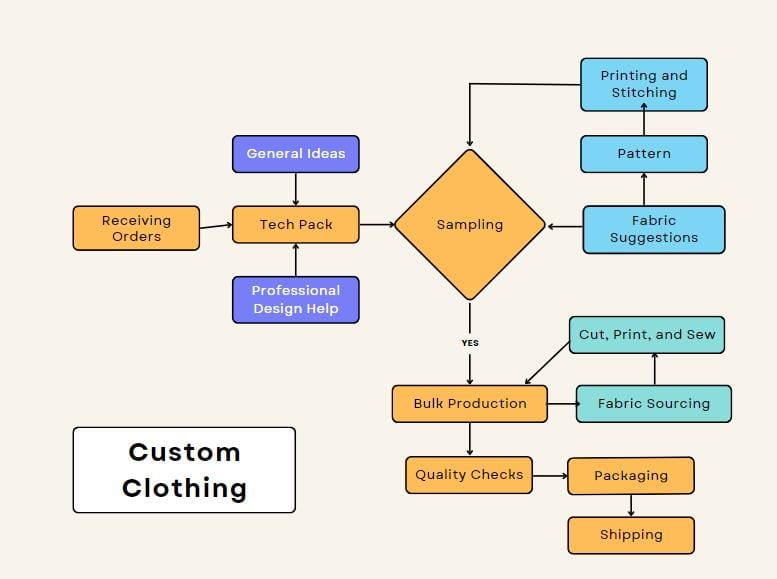
How clothing manufacturing business works?
Clothing manufacturing is a complex process that includes multiple steps. We defined the five most important stages:
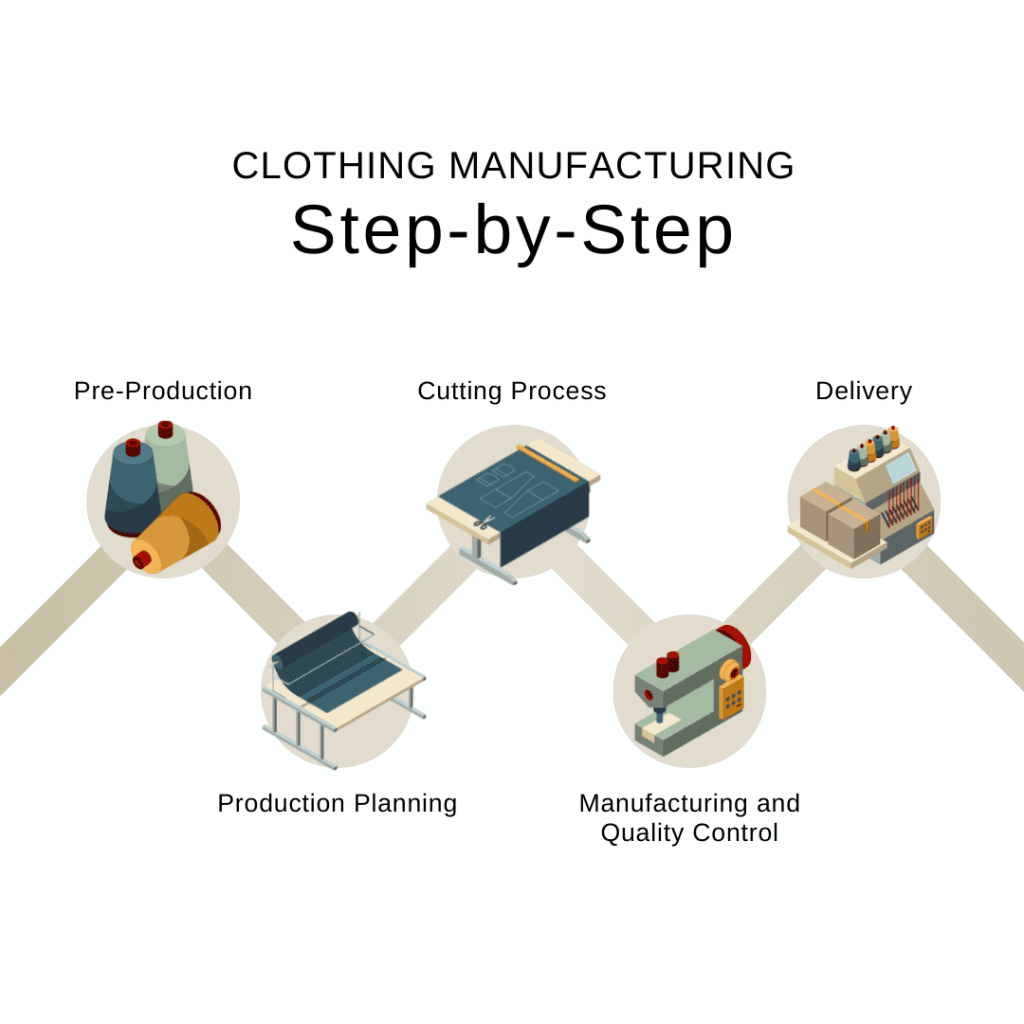
1. Pre-production. Including materials sourcing, pattern making, and sampling.
2. Production planning. The planning team foresees the production and makes sure all activities are completed on time.
3. Cutting process. Using the guidelines provided by the designer, the factory cuts the fabric for sewing. Modern garment manufacturers use laser-cutting technology to prevent wastage.
4. Manufacturing and quality control. Once the production is complete the factory will perform quality the quality check. The customer has a right to return items if they don’t meet the expected standards and quality.
5. Delivery. After the garments pass the quality control, the rest of the production order will be delivered to the customer.
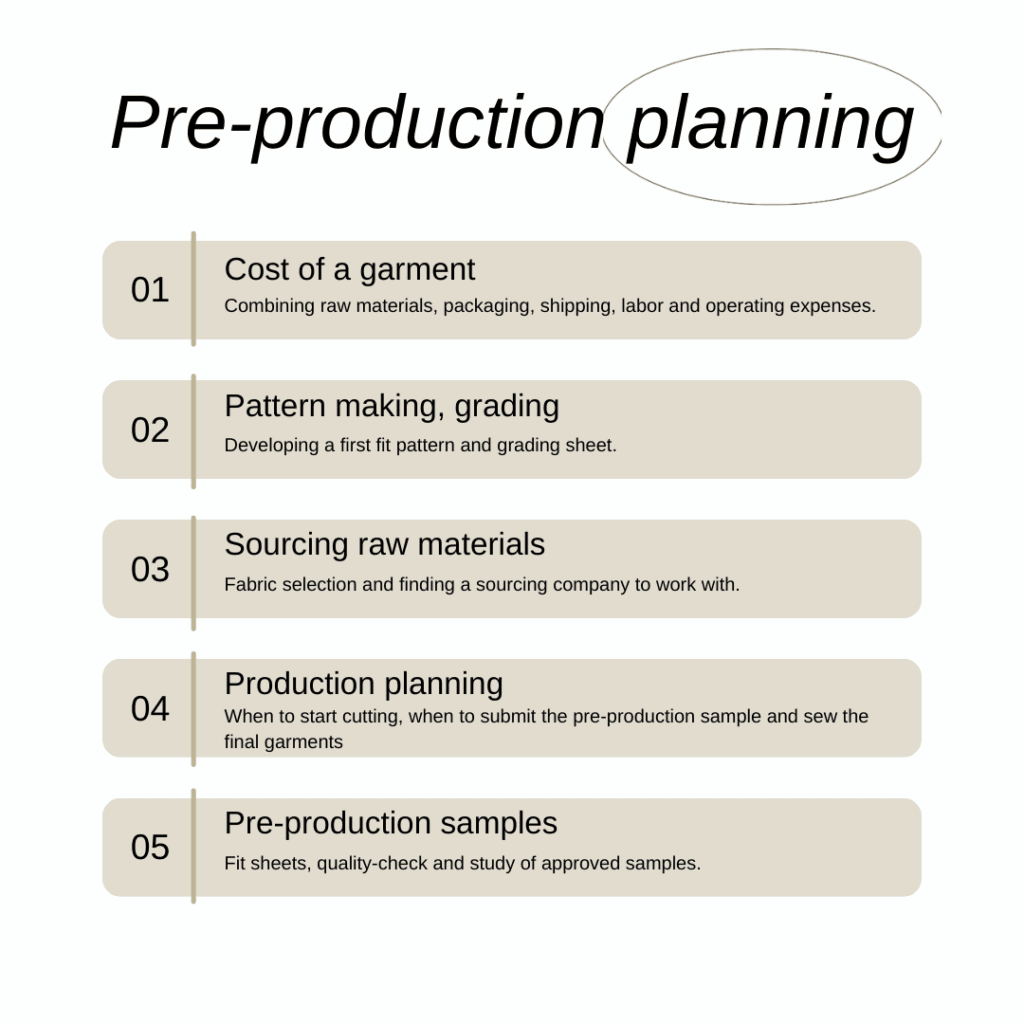
Pre-production planning in clothing manufacturing
The pre-production planning is done prior to the bulk garment production. That includes samples development and approvals, sourcing and testing raw materials, garment costing, pattern making, and production planning. Efficient production can’t be reached without the pre-production planning.
1. Pre-production. Including materials sourcing, pattern making, and sampling.
2. Production planning. The planning team foresees the production and makes sure all activities are completed on time.
3. Cutting process. Using the guidelines provided by the designer, the factory cuts the fabric for sewing. Modern garment manufacturers use laser-cutting technology to prevent wastage.
4. Manufacturing and quality control. Once the production is complete the factory will perform quality the quality check. The customer has a right to return items if they don’t meet the expected standards and quality.
5. Delivery. After the garments pass the quality control, the rest of the production order will be delivered to the customer.
Design
Sketches
Tech-packs
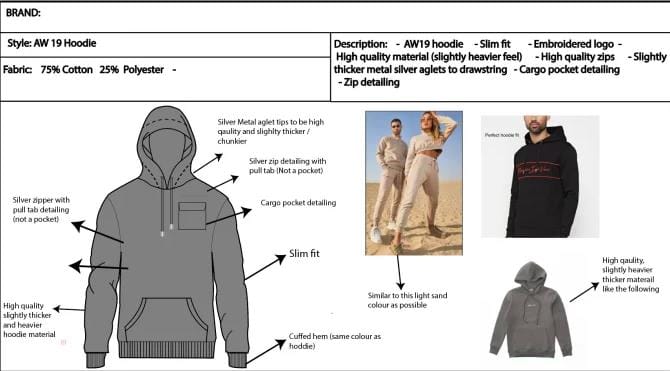
CAD files
How designers and clothing manufacturers collaborate on clothing lines?
- Product development. At this stage, the designer creates a business plan, visualizes an idea, and develops a Tech Pack.
- Pre-production. This stage includes finding a manufacturer to work with, making a production agreement, and creating a sample.
- Manufacturing. Managing the production process includes precise planning of the on-time shipments, effective use of labor, and overseeing the needed supplies and equipment for each order.
SOURCING
Fabrics
- Cotton: cotton voile, cotton cambric, cotton poplin, cotton twill, cotton satin, cotton crepe, cotton double cloth, cotton canvas, cotton dobby, cotton denim, cotton lycra denim, cotton silk, cotton viscose
- Viscose: viscose crepe, viscose dobby, viscose crepe dobby, viscose satin, viscose georgette
- Modal: modal twill, modal satin, modal dobby, modal crepe, modal crepe dobby
- Hemp
- Linen
- Handspun, handwoven
- Tencel twill, tencel denim
- Baby cord, corduroy
- Silk, and more.
Dyeing
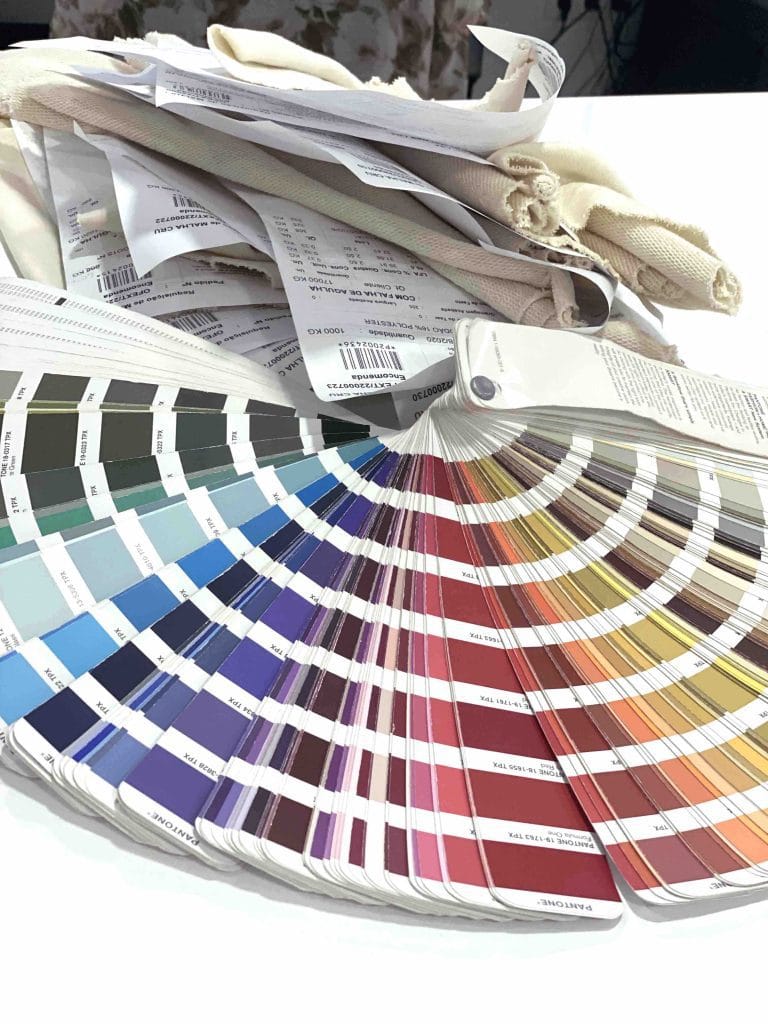
Trims
Labels
- Brand or main label: Main labels indicate a brand name or brand logo of the company. A brand label is associated with the product quality, durability and feel-good factor.
- Size label: A size label defines a specific set of measurements of the human body. Sizes labels may be printed as a letter to denote a specific size.
- Care label: This label includes wash care and ironing instructions. The purpose of care labels is to inform what to do during washing, drying and ironing to maintain colour, protect printed designs, avoid after wash shrinkage and colour bleeding issues.
- Flag label: A small label attached at the outside side seam. Flag labels are normally made of brand logos and are primarily used as design features.
Sampling
Proto-sample
Fit Sample
Pre-production/ Gold seal sample
Shipment sample
Manufacturing and quality control
Fabric inspection
Spreading, Form Layout and Cutting
- allow operators to identify fabric defects;
- control the tension and slack of the fabric during cutting; and
- ensure each ply is accurately aligned on top of the others.
Embroidery, Screen printing, and Embellishments
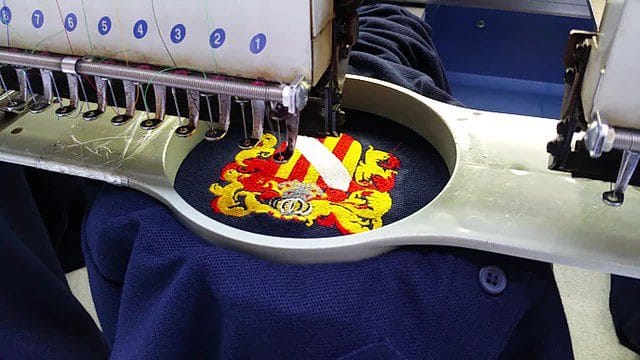
Sewing
- The central process in the manufacture of clothing is the joining together of components.
- Stitching is done as per the specification is given by the buyer.
- High power single needle or computerized sewing machines are used to complete the sewing operation. Fusing machines for fusing collar components, button, and buttonhole, sewing machines for sewing button and buttonholes are specifically employed.
Testing
Measuring garment dimensions
Checking function of closures, buttons and other accessories
- Pull test: Pull at the accessory with a pull gauge for 10 seconds to confirm it stays securely attached to the garment.
- Fatigue test: Use the accessory as intended for 50 cycles (e.g. button and unbutton 50 times) in quick succession and confirm it’s still functional and the garment is undamaged after testing.
- Stretch test: Stretch elastic bands and straps for proper elasticity and check for any breakage in elastic fibres or stitching.
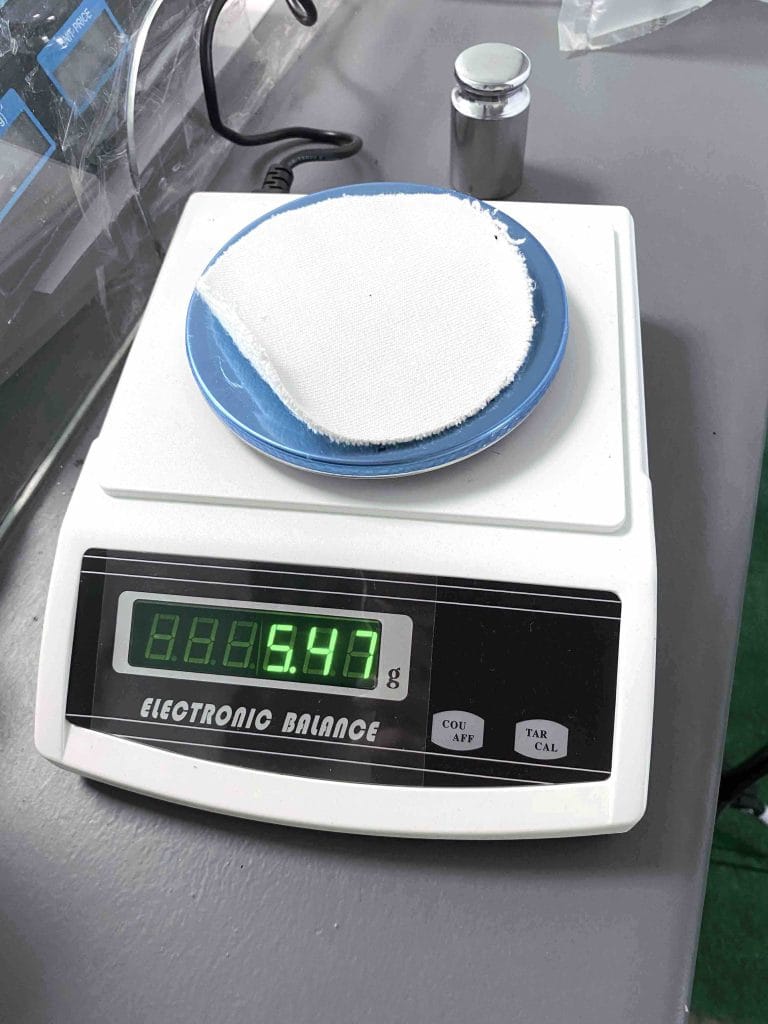
Testing fabric for conformance to quality standards
Fabric GSM check
Stitches per inch (SPI) check
Material Composition Check
Report on quality defects and severity
- An untrimmed thread
- Shading variance between different pieces of the same style or different parts of the same piece.
- A loose needle left in the garment.
Packaging
Apparel packaging sequence
- After folding, garments are packed in polyethylene packets.
- During packing, the position of the sticker and other labels should be confirmed.
- After polyethylene packing, garments are kept in the sorting rack according to size and color.
- Then garments are placed in an inner box from the sorting rack according to size and color.
- Packing in an inner box according to the work order is called “assortment”.
- The packaging that is done by the fixed number of inner boxes in the carton is called cartooning.
- Thereafter the cartons are sealed.
- Cartons bear some information on them eg- carton box number, carton box size, shipping mark, destination etc.