
The Athlete’s Dilemma: Why Your Yoga Wear Might Be Hindering Your Practice & How to Fix It

For the dedicated yogi or the high-intensity athlete cross-training with vinyasa, the choice of apparel is rarely trivial. It is the interface between effort and execution. Yet, a significant portion of activewear on the market today addresses aesthetics over biomechanical function. This article dissects the primary engineering failures in common yoga clothing and provides evidence-based criteria for selecting gear that supports, rather than sabotages, your practice.
⚠️ Problem 1: Structural Integrity & Modesty (The Squat Test)
The Pain Point: You’re in a deep malasana (garland pose) or a forward fold, and you feel a chill—or worse, you catch a glimpse in the mirror of fabric stretched to a translucent sheen. This is a failure of fabric opacity under tension and poor seam construction. Many blends with high elastane content fatigue quickly, losing their recovery and becoming sheer.
✅ The Engineering Solution:
Look for double-knit or compression-weave fabrics with a minimum of 20% elastane but crucially, a high denier per filament (DPF) count. Seek out garments that specify “four-way stretch with full opacity.” Brands that utilize a gusseted crotch and flatlock seams reduce tension points. Perform the ‘bend test’ at the point of sale: if the fabric lightens more than 30% under maximum stretch, reject it. For durability, opt for fabrics like Nylon 66 blends which offer superior recovery compared to standard polyester blends.
⚠️ Problem 2: Waistband Roll-Down & Mid-Practice Sag
The Pain Point: You transition from downward dog to a jumping forward fold, and your waistband has migrated south. You spend the next three asanas adjusting instead of breathing. This is a core failure in the compression gradient and waistband engineering. Standard elastic bands lack the necessary grip and structural memory to stay anchored during dynamic flexion and extension.
✅ The Engineering Solution:
Prioritize pants and shorts with a wide, continuous waistband (minimum 2.5 inches) that incorporates internal silicone gripper strips or a high-friction elastic. The best designs utilize a V-shaped back panel or a contoured waistband that follows the natural lumbar curve, preventing the gapping that leads to roll-down. Additionally, a drawcord is a fail-safe, but it must be anchored at the sides, not just the front, to distribute tension evenly. Look for “stay-put technology” verified by user testing in inversion-based practices.
⚠️ Problem 3: Microclimate Mismanagement (Overheating & Chill)
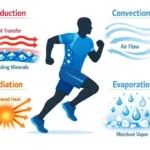
The Pain Point: Hot yoga becomes unbearable as your gear clings like plastic wrap, trapping sweat and raising your core temperature excessively. Conversely, in a slow yin practice, your cotton-blend tee becomes damp, cold, and distracting. This is a failure of moisture vapor transfer rate (MVTR) and thermal conductivity.
✅ The Engineering Solution:
Avoid 100% cotton or basic polyester. Seek out engineered mesh panels in high-heat zones (underarms, spine, behind knees). Fabrics that utilize hydrophilic and hydrophobic yarns (like those with a cool-touch finish) actively pull sweat away and spread it over a larger surface area for rapid evaporation. For hot yoga, consider fabric blends with phase change materials (PCMs) or those with an open-hole knit structure that breathe without sacrificing opacity. Merino wool blends are also exceptional for temperature regulation across varying intensities.
⚠️ Problem 4: Tactile Interference (Slip vs. Stiction)
The Pain Point: In arm balances (like crow pose or handstand scorpion), your arms slide within the sleeves, forcing your muscles to compensate for the instability. Conversely, in twisted lizard, your foot gets stuck inside your pant leg, preventing fluid movement. Your clothing should have differential friction—grip where you need stability, glide where you need mobility.
✅ The Engineering Solution:
This requires strategic siliconized grip prints on the interior of cuffs and hems for poses that require skin-to-fabric contact points. For the torso and legs, the fabric should have a low coefficient of friction on the exterior to allow for smooth transitions. Look for “anchored cuffs” or “non-slip hem” technologies. For sleeved tops, articulated elbows with a gripper interior prevent the sleeve from riding up during arm balances, allowing you to focus on engagement, not readjustment.
🔍 Quick Reference: Diagnostic Checklist for Yoga Apparel
| Failure Point | What to Reject | What to Demand |
|---|---|---|
| Opacity | Single-layer, thin jersey that sheers under tension. | Double-weave, high-DPF nylon with minimum 20% stretch recovery. |
| Waistband | Narrow elastic (<1.5″) with no grip or drawcord. | Wide (>2.5″) contoured band with internal silicone grip. |
| Breathability | 100% polyester or cotton, non-perforated. | Mesh zones, open-hole knits, or hydrophobic/hydrophilic blends. |
| Grip/Slip | Uniform slickness or random sticky spots. | Targeted silicone prints (cuffs/hem) + low-friction body panels. |
The Evidence-Based Practice
Your practice deserves more than fast fashion. It demands apparel engineered for the biomechanics of asana. At AsanaEngine Labs, we rigorously test each garment against these four failure points. We recommend auditing your current gear with this checklist. Replace pieces that fail the squat test, the roll-down test, or the thermal comfort test. Invest in fabrics that move with you, not against you.


💬 WordPress comments will appear here based on your discussion settings.